

On the afternoon of December 16, at the Government Headquarters, Prime Minister Pham Minh Chinh chaired the high-level plenary session of the Vietnam Economic Forum 2025, Outlook 2026. The forum was themed: "Vietnam's Economy: Rapid, Sustainable, and Green Development in the Digital Age."
The forum was organized by the Central Policy and Strategy Committee in collaboration with the Ministry of Finance, the State Bank of Vietnam, and the Vietnam Economic Science Association. Co-chairing the plenary session were Vice Chairman of the National Assembly Vu Hong Thanh and Head of the Central Policy and Strategy Committee Nguyen Thanh Nghi.
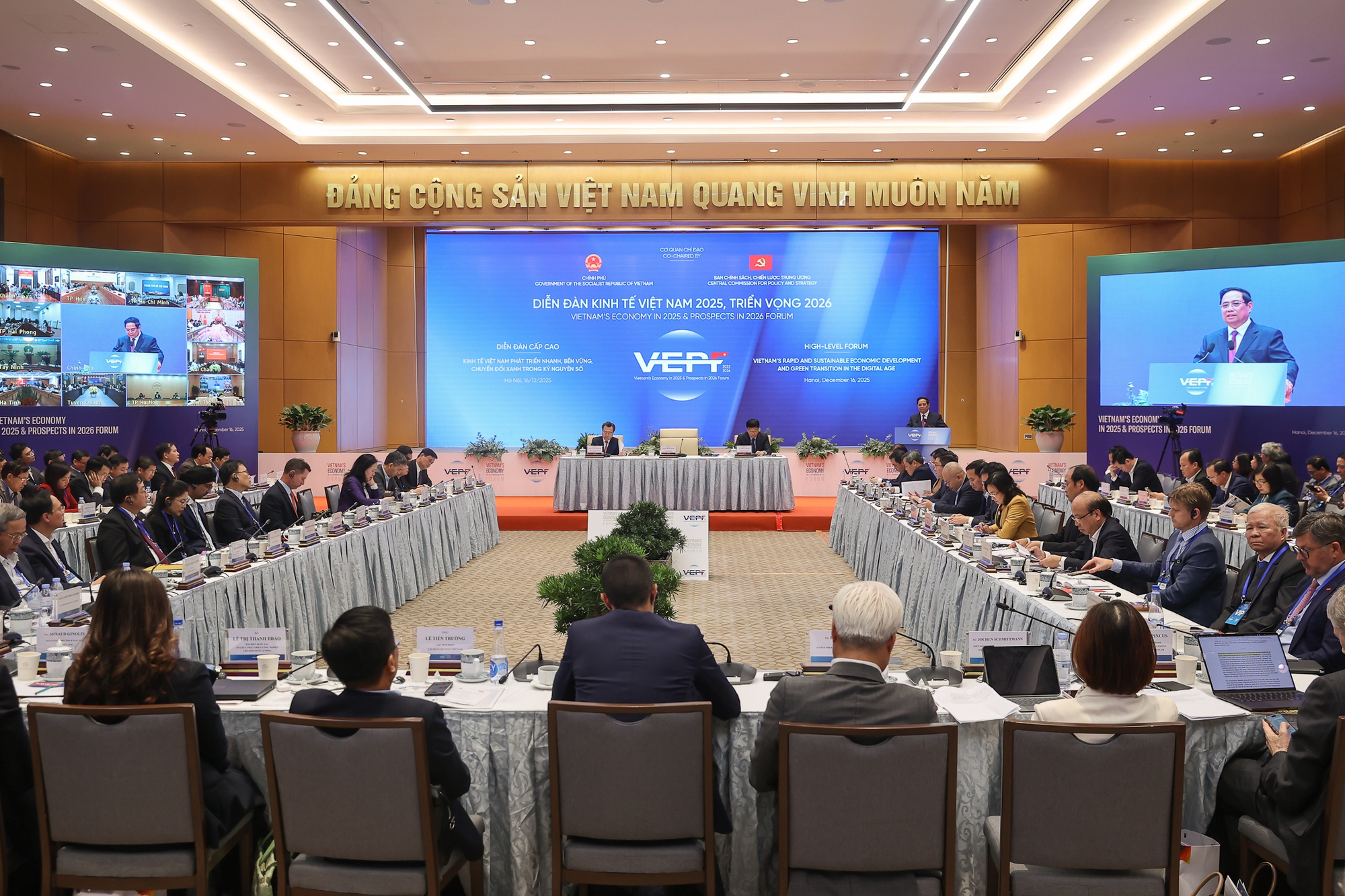
The scene of the Vietnam Economic Forum 2025, prospects for 2026 - Photo: VGP/Nhat Bac
The event was connected online from the Government Headquarters to various provincial and municipal locations, with the participation of leaders from central and local agencies, representatives from foreign countries, international organizations, associations, and businesses both domestically and abroad.
At the Dak Lak provincial location, Vice Chairman of the Dak Lak Provincial People's Committee Truong Cong Thai, along with leaders from departments, sectors, the Dak Lak Business Association, and the Young Entrepreneurs Association of Dak Lak, were present.
Delegates at the forum focused on three pivotal agendas. First, they conducted a comprehensive and objective assessment of the 2025 macroeconomic performance, scrutinizing both achievements and inherent limitations. Second, the session analyzed the evolving global and domestic landscape to identify key opportunities and challenges for the 2026–2030 period. Finally, participants proposed strategic solutions to drive double-digit growth, emphasizing a green transition integrated with robust digital transformation. These discussions aimed to establish actionable policy orientations and specific solutions for 2026.
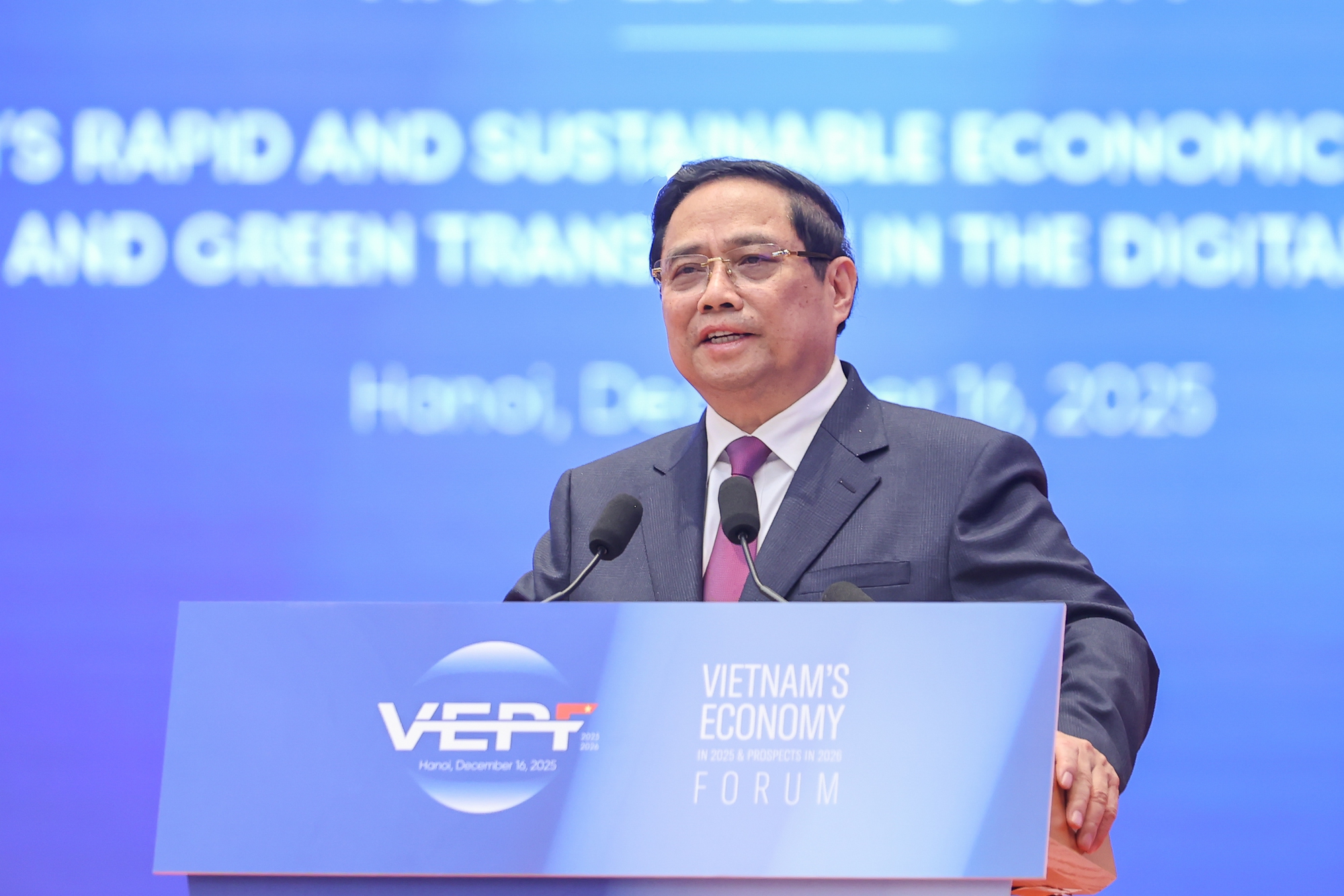
Prime Minister Pham Minh Chinh delivered directives at the Vietnam Economic Forum 2025, Outlook 2026 - Photo: VGP/Nhật Bắc.
Vice Chairman of the National Assembly Vu Hong Thanh emphasized that the National Assembly has prioritized perfecting the institutional framework to drive socio-economic development and meet the nation’s evolving demands. According to the Vice Chairman, green development is no longer a choice but a mandatory path. To this end, the National Assembly has enacted several laws aimed at pivoting growth models toward low-carbon emissions, ensuring a balance between environmental harmony and economic progress while aligning with international standards to prevent "shocks" to the business community. Furthermore, focus is being placed on establishing robust data governance, cybersecurity, and protection mechanisms for citizens and enterprises, fostering an environment for rapid and sustainable digital growth.
The Vice Chairman also stressed the necessity of profound innovation, shifting the focus from "administrative management" to "developmental facilitation." He emphasized the importance of strategic policy planning, rigorous impact assessments, and continuous monitoring to identify and resolve institutional bottlenecks through timely amendments. Furthermore, he reaffirmed the National Assembly's commitment to listening to the business community, noting that their feedback is indispensable for refining legislation and bolstering investor confidence.
The Vice Chairman stated that the recommendations presented at the forum serve as vital inputs for the National Assembly. These insights will guide the ongoing research and amendment of laws, ensuring that the legal framework remains practical, transparent, and capable of fostering trust among both citizens and the business sector.
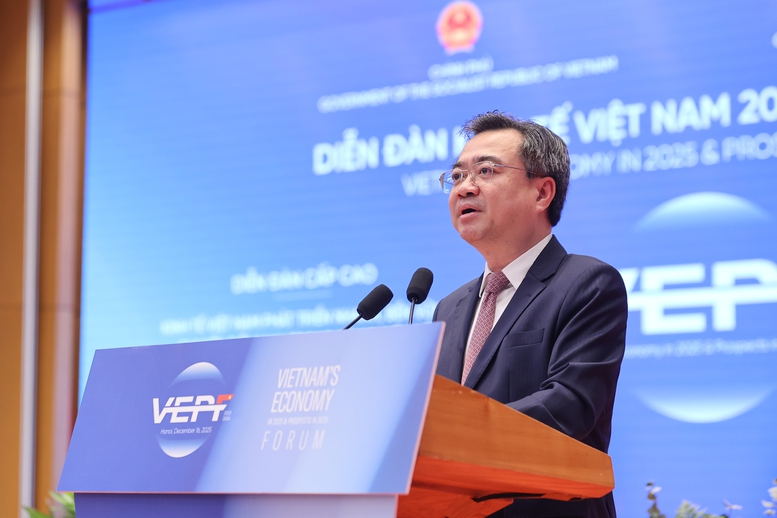
Head of the Central Policy and Strategy Committee Nguyen Thanh Nghi opened the Vietnam Economic Forum 2025, prospects for 2026 - Photo: VGP/Nhat Bac
In his remarks, Prime Minister Pham Minh Chinh underscored the forum's significance in reviewing Vietnam’s 2025 economic performance and strategizing for 2026. He emphasized a vision for rapid and sustainable growth anchored in the "dual transformation" strategy—the convergence of greening and digitalization.
Commending the forum's organization and the quality of discussions, the Prime Minister directed the Central Policy and Strategy Committee, ministries, and local authorities to synthesize all recommendations. This data will serve as a vital foundation for evaluating, refining, and planning future socio-economic policies.
Guided by the motto: "The Party leads, the State facilitates, enterprises take the lead, and the people thrive through public-private partnerships," the Prime Minister asserted that "resources originate from vision, motivation stems from innovation, and strength resides in the people and businesses." Based on these pillars, he outlined the strategic roadmap for 2026 and the subsequent period.
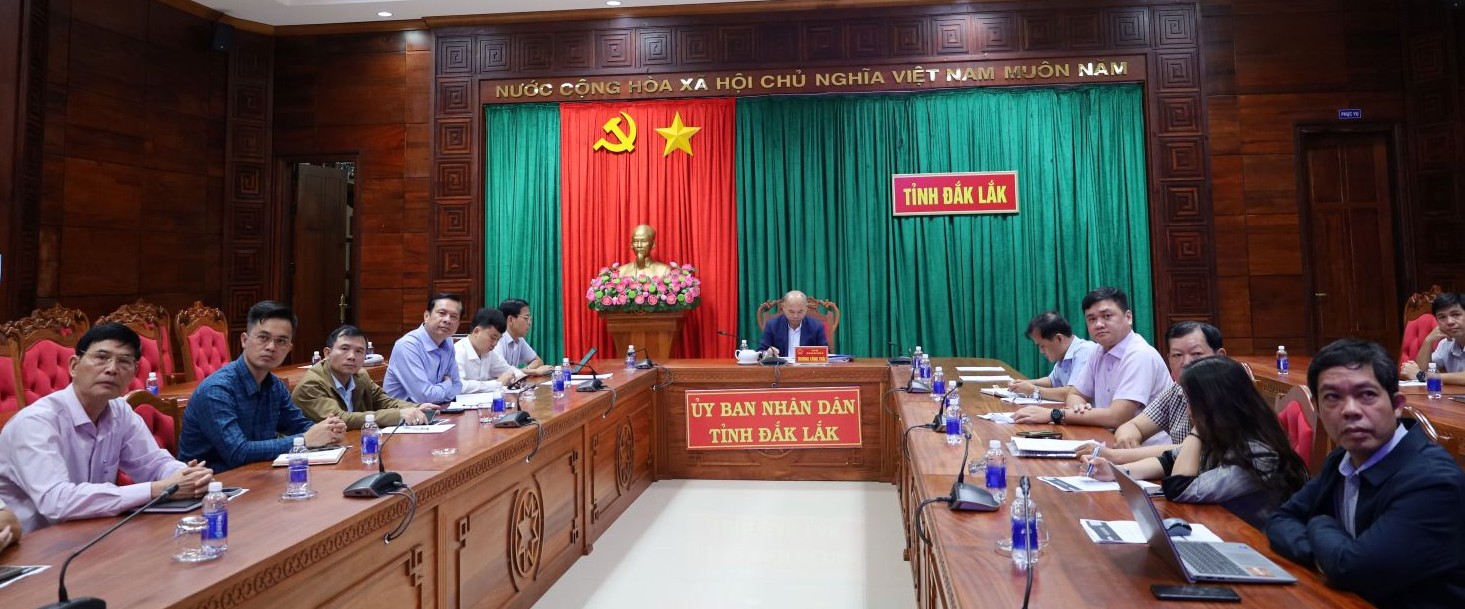
Delegates attending the conference at the People's Committee of Dak Lak Province.
Accordingly, the Government aims to promote rapid and sustainable development anchored in the "dual transformation: greening and digitalization." Vietnam is striving for double-digit growth while maintaining macroeconomic stability, controlling inflation, and ensuring major economic balances. Central to this strategy is enhancing the economy's resilience and competitiveness, alongside improving analytical and forecasting capabilities to respond flexibly and effectively to external fluctuations. Vietnam remains steadfast in creating a favorable environment for sustainable growth through these stable macroeconomic foundations.
Vietnam is strengthening the implementation of strategic breakthroughs, particularly in institutional reform, to transform the "bottleneck of bottlenecks" into a national competitive advantage. This serves as the primary driver for digital and green transformation. Furthermore, the country is intensifying the training of high-quality human resources, prioritizing key sectors such as science and technology, smart management, and basic sciences. Simultaneously, the focus remains on building a synchronous and modern strategic infrastructure system to facilitate the dual transformation process.
The strategy involves renewing traditional growth drivers while aggressively promoting new ones. Key priorities include the decisive implementation of Resolution No. 57-NQ/TW and the acceleration of digital and green transitions. Special emphasis is placed on developing the semiconductor industry, AI, and clean energy, while effectively turning data into a strategic resource. Vietnam is also exploring new growth spaces through inter-regional connectivity and the gradual exploitation of outer space, underground space, and the marine economy.
Efforts are being directed toward developing breakthrough scientific research programs for 11 strategic technology groups. This includes systematically building national databases on land and minerals to turn data into resources. Furthermore, Vietnam is establishing world-class research and development (R&D) facilities dedicated to high-tech industries, specifically focusing on electronics, semiconductors, and artificial intelligence.
Vietnam continues to diversify its methods of mobilizing and utilizing resources by promoting socialization and attracting non-state investment. A top priority is attracting FDI into high-tech industries, green production, and the circular economy, ensuring a strong link with domestic investment. The export strategy is also being restructured, shifting from "low-price dominance" to a model based on brands and high standards. This involves vigorously promoting digital trade programs to effectively reach international markets.
The Prime Minister emphasized that Vietnam's goal of double-digit growth is well-grounded, feasible, and backed by significant development potential. With high political determination and decisive action, Vietnam seeks the continued partnership and support of international friends. By welcoming heartfelt and responsible contributions, Vietnam aims to turn aspirations and trust into concrete actions, resulting in specific projects with measurable and quantifiable effectiveness.
Kim Bao
- Approval of the Scheme for Organizing the Dak Lak Durian Festival 2026 (03/06/2026, 08:12)
- Chairman of the Provincial People's Committee Do Huu Huy visits Huong Son Pagoda on the occasion of the 2026 Vesak Day (03/06/2026, 07:16)
- Secretary of the Provincial Party Committee Luong Nguyen Minh Triet conducts on-site surveys of several community tourism sites in the eastern region of the province (03/06/2026, 07:06)
- Launching the "Leader Summer Camp" Program to Connect Education and Create a Meaningful Summer for Students in Dak Lak (28/05/2026, 14:05)
- Chairman of the Provincial People's Committee Do Huu Huy meets and works with FLC Group on investment proposals (27/05/2026, 07:47)
- The Closing and Awarding Ceremony for the Provincial Technical Innovation Contest 2024-2025 (22/05/2026, 08:32)
- Conference on Dissemination of Central and Dak Lak Provincial Party Committee Documents (22/05/2026, 08:29)
- Samsung Group Surveys Investment Opportunities in Dak Lak (22/05/2026, 08:22)
- Deputy Minister of Agriculture and Environment Vo Van Hung visits and works with the People's Committee of Dak Lak Province (15/05/2026, 10:19)
- Dak Lak promotes cooperation with UNDP in climate change adaptation and sustainable agriculture (15/05/2026, 10:13)
- Chairman of the Provincial People's Committee Do Huu Huy: Proactively generate revenue from land resources to serve growth objectives (15/05/2026, 09:59)